
Returning to Exercise After Birth: A Practical Guide to Recovery and Exercise Readiness
Updated: Aug 6
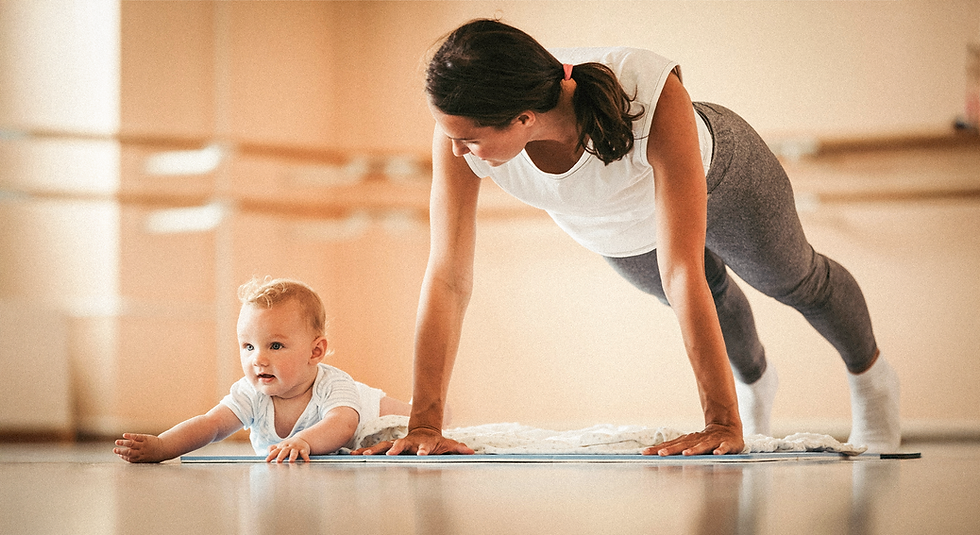
Returning to exercise after having a baby is often discussed as a question of timing.
When can I run again?
When can I lift weights?
When can I return to my usual workouts?
In reality, postnatal exercise rehabilitation is not primarily about time. It is about recovery, function, and the body's ability to tolerate increasing levels of physical load.
Pregnancy and birth place significant demands on the musculoskeletal system, pelvic floor, abdominal wall, cardiovascular system, and nervous system. Recovery from these changes continues well beyond the early weeks after birth.
Understanding how to rebuild capacity safely can help reduce the risk of symptoms, setbacks, and injury while supporting long-term physical health.
Recovery comes before fitness
One of the most common misconceptions in postnatal care is that recovery and exercise are separate processes.
They are not.
Recovery is the first stage of exercise rehabilitation.
In the weeks immediately after birth, the body is healing and adapting at multiple levels. Tissue repair is occurring throughout the pelvic floor and abdominal wall. Hormonal changes continue to influence connective tissue, energy regulation, and musculoskeletal function. Blood volume and cardiovascular function gradually return towards pre-pregnancy levels. Sleep disruption places additional demands on recovery capacity.
For women and birthing parents who have had a caesarean birth, recovery also includes healing from major abdominal surgery.
During this stage, the priority is not rebuilding fitness. The priority is allowing healing to occur.
Gentle movement can support circulation, mobility, and wellbeing, but recovery should remain the primary focus.
Walking as the first stage of exercise rehabilitation
Walking is often underestimated in postnatal recovery.
In reality, it is one of the most effective ways to begin rebuilding physical capacity after birth.
Walking provides low-impact cardiovascular loading while placing relatively modest demands on the pelvic floor and abdominal wall. It allows gradual reconditioning of the cardiovascular system and provides an opportunity to assess how the body responds to increasing activity levels.
The goal is not to achieve a particular step count. The goal is progressive adaptation.
Many women and birthing parents benefit from starting with short walks and increasing duration gradually over time.
As activity increases, it is important to monitor for symptoms such as:
Pelvic heaviness or pressure
Urinary leakage
Pelvic pain
Increasing abdominal discomfort
Excessive fatigue following activity
Symptoms provide useful clinical information about how well the body is tolerating load and whether progression is appropriate.
Re-establishing pelvic floor function
The pelvic floor plays a central role in postnatal exercise rehabilitation.
Throughout pregnancy, the pelvic floor supports increasing load from the growing uterus and changes in intra-abdominal pressure. During vaginal birth, these tissues undergo substantial stretching. Even for a caesarean birth, pregnancy-related changes to the pelvic floor are significant.
Recovery requires more than simply restoring strength.
Normal pelvic floor function depends on strength, endurance, coordination, relaxation, and the ability to respond appropriately to changes in pressure during movement and exercise.
Many women and birthing parents benefit from guided pelvic floor rehabilitation during the postnatal period. This may include exercises focused on improving muscle awareness, coordination, endurance, and functional control during everyday activities.
The goal is not simply to perform pelvic floor exercises. The goal is to restore pelvic floor function.
Why a pelvic health physiotherapy assessment matters
A routine six-week postnatal check is an important part of postnatal care.
However, it is not designed to assess readiness for running, jumping, heavy lifting, or other forms of high-impact exercise.
For women and birthing parents planning to return to exercise, a pelvic health physiotherapy assessment is one of the most valuable steps in the rehabilitation process.
A comprehensive assessment typically evaluates:
Pelvic floor muscle function
Symptoms of urinary or anal incontinence
Symptoms of pelvic organ prolapse
Abdominal wall recovery and diastasis recti
Core function and pressure management
Movement patterns relevant to exercise and daily activities
For most women and birthing parents, assessment from approximately 6-8 weeks after birth is appropriate.
The purpose is not simply to identify problems. It is to understand how recovery is progressing and establish a personalised rehabilitation plan based on individual findings.
Rebuilding strength before returning to impact
Once early recovery has progressed and foundational function has been restored, attention can shift towards rebuilding strength and load tolerance.
This stage should focus on progressive strengthening rather than returning immediately to previous levels of exercise.
Bodyweight movements, resistance training, and functional exercises can all play an important role in restoring capacity.
Particular attention should be paid to:
Symptom response during exercise
Recovery between sessions
Pelvic floor function under load
Movement quality and control
The objective is to develop a foundation that allows the body to tolerate more demanding forms of exercise safely.
For many women and birthing parents, this stage can last several months.
Returning to running and high impact exercise
Running, jumping, HIIT, and high-load lifting place substantially greater demands on the pelvic floor, abdominal wall, connective tissues, and musculoskeletal system than lower-impact activities.
For this reason, current postnatal return-to-running guidance generally recommends waiting until at least 12 weeks postpartum before considering a return to impact exercise.
Importantly, 12 weeks should be viewed as the earliest point at which readiness can be assessed rather than a target that everyone should achieve.
Many women and birthing parents require longer periods of rehabilitation before impact exercise is appropriate.
Before returning to running or similar activities, it is generally helpful to demonstrate:
The ability to walk briskly for 30 minutes without symptoms
Good pelvic floor function
Adequate lower limb strength and control
Tolerance of progressively increasing exercise loads
Absence of symptoms such as urinary leakage, pelvic heaviness, pelvic pain, or abdominal symptoms
A gradual return is usually preferable to an immediate return to previous training levels.
Walk-run intervals, progressive loading, and careful monitoring of symptoms often provide a safer and more sustainable pathway back to exercise.
Recovery is individual
There is no single timeline that applies to everyone
.
Birth experience, mode of delivery, pelvic floor symptoms, medical complications, sleep, mental health, previous fitness levels, and overall health can all influence recovery.
Some women and birthing parents will progress more quickly. Others will require longer periods of rehabilitation.
Neither is a reflection of effort, motivation, or success.
The goal is not to return to exercise as quickly as possible.
The goal is to return with confidence, function, and a body that is prepared for the demands being placed upon it.
When recovery is approached progressively and supported appropriately, exercise can become an important part of both postnatal recovery and long-term health.
Written by Hesta Health. Validated by Maria Elliott of The Mummy MOT and by a registered postnatal GP.


Comments